The Comfort Trap: How Your Wardrobe Staples May Be Quietly Dimming Your Style
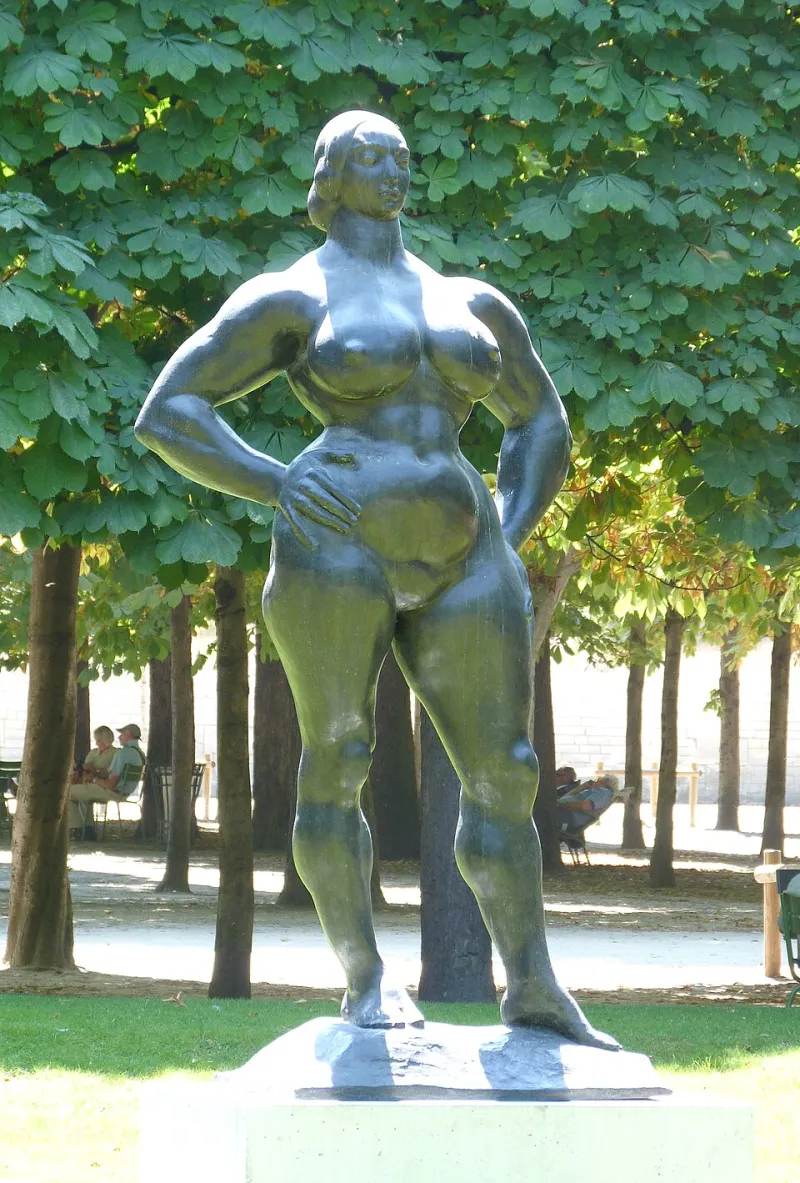
Photo: Siren-Com, CC BY-SA 3.0, via Wikimedia Commons
There is a particular satisfaction in owning something that works with everything. The perfectly cut navy blazer. The slim-fit trousers in a neutral stone. The white button-down that has accompanied you from board meetings to weekend brunches without a single misstep. These are the pieces we praise in every style guide, and for good reason — they are the architecture of a functional wardrobe.
And yet.
If you have ever stood before a closet full of clothes and felt, despite the abundance, a quiet sense of sameness — a nagging suspicion that you look fine but not quite yourself — it is worth asking a more uncomfortable question: Could the very pieces you trust most be the ones holding your style in place?
The Illusion of Versatility
Versatility is celebrated as the highest virtue in modern dressing. A piece that pairs with everything, transitions across seasons, and requires minimal styling effort is considered a wardrobe triumph. And in practical terms, it often is. But versatility, taken too far, carries a hidden cost.
When a garment works with everything, it also tends to ask nothing of you. It requires no commitment, no particular vision, no willingness to be seen in a specific way. Over time, a wardrobe built primarily around such pieces can begin to function less like a form of self-expression and more like a uniform — reliable, presentable, and thoroughly safe.
The paradox is this: the more a piece accommodates your life, the less likely it is to expand it.
Why We Cling to What Works
The psychology behind wardrobe defaults is well-documented. Decision fatigue, the anxiety of judgment, the fear of getting it wrong — these are all real forces that drive us back toward the familiar. When mornings are rushed and stakes feel high, the navy blazer wins every time.
But there is also something more subtle at work. Over years of wearing the same trusted pieces, we begin to confuse comfort with identity. We tell ourselves that the neutral palette is simply who we are, that we are not the kind of person who wears color or structure or anything that demands to be noticed. What began as a practical choice quietly hardens into a story we tell about ourselves — and stories, once settled, are difficult to revise.
This is the invisible ceiling. Not a lack of options, but a narrowing of imagination.
Recognizing the Plateau
Before any meaningful shift can occur, it helps to identify the specific ways a wardrobe plateau manifests. Consider the following:
- You shop for the same silhouettes repeatedly. Even when you intend to try something new, you leave with another variation of what you already own.
- You avoid pieces that require effort to style. If something doesn't immediately pair with three other items in your closet, it feels like a risk not worth taking.
- Compliments on your appearance feel generic. People say you look polished or put-together, but rarely that you look striking or interesting — words that suggest a more defined point of view.
- Getting dressed feels efficient but uninspiring. The process works, but it no longer feels like an act of self-expression.
None of these are moral failings. They are simply signals that the wardrobe has settled into a pattern that once served you well but may no longer be the full picture.
The Strategic Discomfort Framework
Expanding your fashion vocabulary does not require abandoning what works. It requires introducing, with intention, pieces that feel slightly beyond your current comfort zone — and then giving them the space to teach you something.
Begin with one deliberate departure per season. Rather than overhauling your closet, select a single piece that genuinely challenges your defaults. This might be a structured coat in a saturated color, a pair of wide-leg trousers that require a different relationship with proportion, or a blouse with an unexpected detail — a sculptural collar, an asymmetric hem — that asks to be the focal point of an outfit rather than its quiet background.
Wear it before you are ready. The instinct is to wait for the right occasion, the perfect confidence, the moment when it all comes together effortlessly. Resist this. Wear the piece to an ordinary Tuesday. The awkwardness you feel is not a sign that the garment is wrong — it is the sensation of your style vocabulary expanding.
Resist the urge to neutralize it immediately. When a statement piece feels too much, the reflexive response is to soften it with familiar companions: the safe blazer, the reliable flat. Occasionally, allow the piece to stand without apology. This is how you begin to understand what it is actually capable of — and what you are capable of wearing.
Document the outcomes. A brief note or photograph after wearing an experimental piece helps you track how your comfort level shifts over time. What felt bold in February often feels natural by May. This record also reveals which departures genuinely resonate with who you are becoming, and which were simply exercises in novelty.
The Role of Intentional Rotation
The goal is not to retire your staples — they remain essential, and their value is real. The goal is to ensure they are serving you rather than governing you.
Consider building what might be called a tension wardrobe: a closet in which the familiar and the challenging exist in deliberate conversation. Your trusted navy blazer becomes more interesting when paired with something that tests it. Your stone trousers take on a new character when worn with a blouse that would never have occurred to you six months ago.
This is, in essence, the difference between a wardrobe that functions and a wardrobe that speaks. Function is the floor. Expression is the aspiration.
Elegance Is Not Stasis
At Little Étoile, we believe that true elegance is not a fixed destination but a practice — one that requires both discipline and a willingness to be surprised by yourself. The most compelling women we admire are not those who have found the perfect formula and repeated it indefinitely. They are those who have cultivated a strong enough foundation to take risks from, knowing that the foundation will hold even when the experiment is imperfect.
Your most-worn pieces are not the enemy. They are the ground from which something more fully realized can grow — provided you are willing, now and then, to step off them entirely.