The Invisible Architecture: How Proportion Shapes the Way the World Sees You
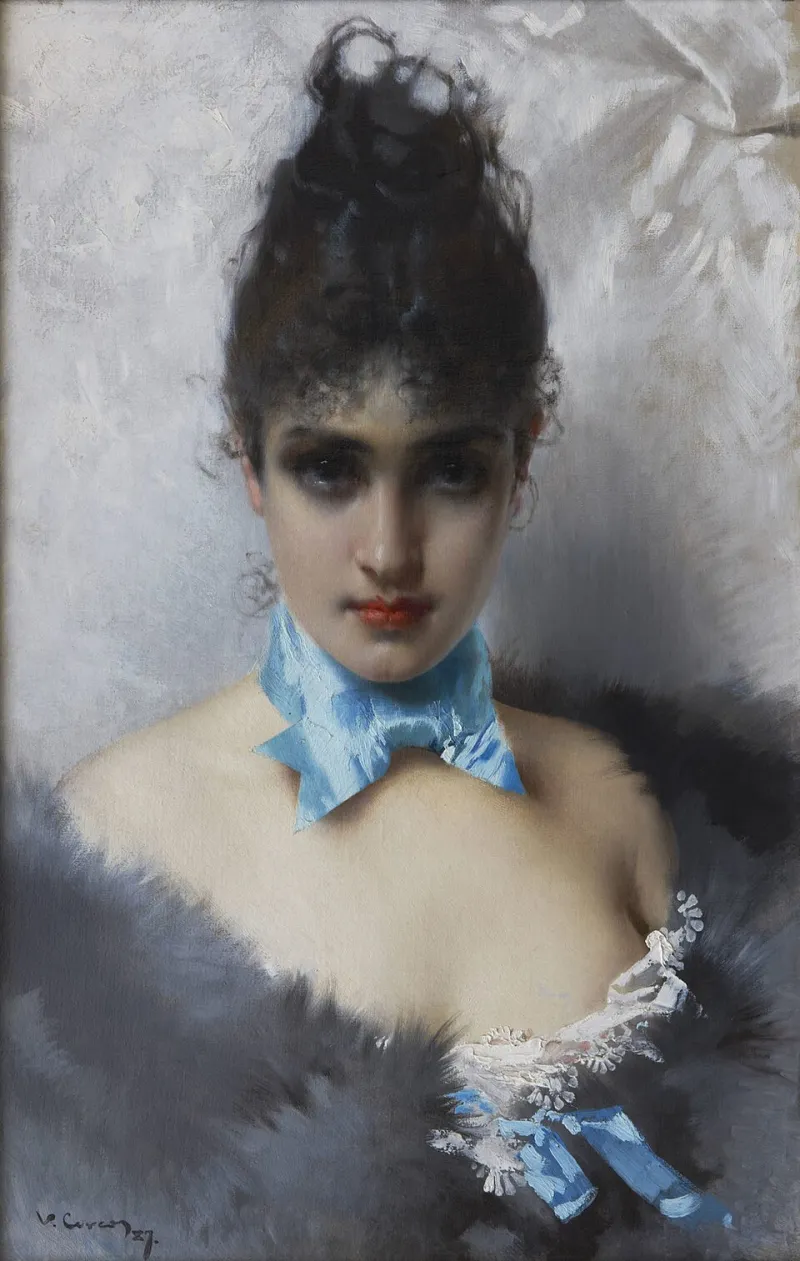
Photo: Vittorio Matteo Corcos, Public domain, via Wikimedia Commons
Two women step into the same room wearing identical blouses and trousers. One looks effortlessly polished; the other, somehow, does not. The garments are the same — so what accounts for the difference? The answer lies not in the clothes themselves, but in the silent, structural logic of proportion. It is the invisible architecture beneath every great outfit, and once you learn to see it, you cannot unsee it.
At Little Étoile, we believe that true elegance is rarely about acquisition. More often, it is about understanding — specifically, understanding how the relationships between garment lengths, volumes, and silhouettes interact with the body beneath them. This is the conversation that separates a wardrobe that functions from one that genuinely elevates.
What Proportion Actually Means in Getting Dressed
In the context of fashion, proportion refers to the visual ratio created when clothing meets the body. It is the interplay between where a hem falls, how a waistline is defined, and how volume is distributed across the figure. These relationships create an impression long before the eye registers any individual detail — a fabric's texture, a garment's color, or the quality of its construction.
Think of proportion as the grammar of dressing. A sentence can contain beautiful words and still fail to communicate if the structure is wrong. Similarly, even the most luxurious pieces can fall flat when the proportional relationships between them — and between them and the wearer — are misaligned.
This is precisely why identical garments produce such different results on different women. It is not a matter of body type in any reductive sense. It is a matter of whether the clothes are being worn in a way that creates visual harmony, or visual noise.
The Three Relationships Worth Understanding
Developing an intuitive sense of proportion begins with recognizing three foundational relationships.
Top to bottom balance. The most immediately legible proportional relationship is the one between what you wear above and below the waist. A voluminous top calls for a streamlined bottom; a full skirt invites a more fitted or tucked-in top. When both halves of an outfit carry equal visual weight, the eye has nowhere to settle, and the overall impression becomes muddled rather than intentional. The goal is not symmetry — it is counterbalance.
Hemline and the body's natural architecture. Where a garment ends matters enormously. A midi skirt that cuts across the widest point of the calf can visually shorten the leg; the same skirt, hemmed an inch or two lower or higher, may elongate it. Cropped jackets that end at the hip's widest point can broaden the silhouette unintentionally, while those that fall just above it tend to create a more refined line. These are not rigid rules, but they are worth understanding before you dismiss a piece as simply "not working for you."
The waist and where it appears to live. The perceived waistline — the narrowest point of an outfit's silhouette — need not correspond exactly to the body's anatomical waist. A belt worn slightly higher, a tuck at the front of a shirt, or a high-waisted trouser can all shift where the eye reads the waist to be. This has a cascading effect on how long the legs appear, how the torso reads, and how the overall silhouette is interpreted.
Why Fit Is Not the Same as Proportion
A common misconception is that proportion is simply a matter of fit — that if clothes fit correctly, proportion takes care of itself. This conflates two distinct concepts. Fit refers to how a garment conforms to the body; proportion refers to how garments relate to one another and to the body as a whole.
A perfectly fitted oversized blazer, for instance, fits by design — it is meant to be generous in its dimensions. But whether it is proportionate depends on what accompanies it. Paired with wide-leg trousers of a similar volume, it may create an overwhelming silhouette. Paired with slim-cut trousers or a sleek midi skirt, the same blazer suddenly reads as intentional and sophisticated.
This distinction liberates the modern woman from an overly prescriptive approach to dressing. You are not confined to tailored, body-skimming clothes to achieve elegance. Volume, drape, and ease are all entirely compatible with a refined aesthetic — provided the proportional relationships are considered.
Developing the Eye: A Practice, Not a Formula
Learning to dress with proportion in mind is less about memorizing rules and more about cultivating observation. Begin with your existing wardrobe — the one you already own — and treat it as a laboratory.
Stand in front of a full-length mirror and, before assessing individual pieces, ask yourself: where does the eye travel? Does it move fluidly from shoulder to hem, or does it snag somewhere — at a hemline that interrupts the leg, at a waistband that sits awkwardly, at a volume that overwhelms? The eye's journey through a silhouette is a reliable indicator of whether proportion is working.
Next, experiment with small adjustments before reaching for new purchases. Tuck in a shirt that you typically leave untucked. Roll the sleeves of a jacket to reveal the wrist. Try a belt where you have never worn one before. These micro-edits shift proportional relationships in ways that can be genuinely revelatory — and they cost nothing.
It is also worth studying how women you admire are dressed, not to replicate their choices, but to analyze the proportional logic behind them. What is the ratio of their top to bottom volumes? Where does the eye settle? What creates the impression of elongation or definition? Over time, this kind of deliberate observation trains the eye to recognize balance instinctively.
The Luxury Illusion and the Proportional Secret
There is a reason why certain women appear expensively dressed regardless of what they are actually wearing. It is rarely the label; it is the silhouette. Clothes that are proportioned well — that create a clean, intentional line and distribute visual weight thoughtfully — carry an inherent sense of refinement that transcends price point.
This is, in fact, one of the great quiet truths of elegant dressing: the impression of luxury is architectural before it is material. A beautifully proportioned outfit in modest fabric will read as more considered than a poorly proportioned one in the finest cashmere. The structure, the line, the balance — these are what the eye registers first and remembers longest.
At Little Étoile, we return to this principle often, because it speaks to a broader philosophy of dressing with intention. The most powerful changes to your wardrobe may not require a single new purchase. They may simply require a new way of seeing what you already have — and a willingness to engage with the quiet, invisible architecture that makes the difference between wearing clothes and wearing them well.