The Pieces You Already Own: Unlocking the Hidden Potential of Your Overlooked Wardrobe
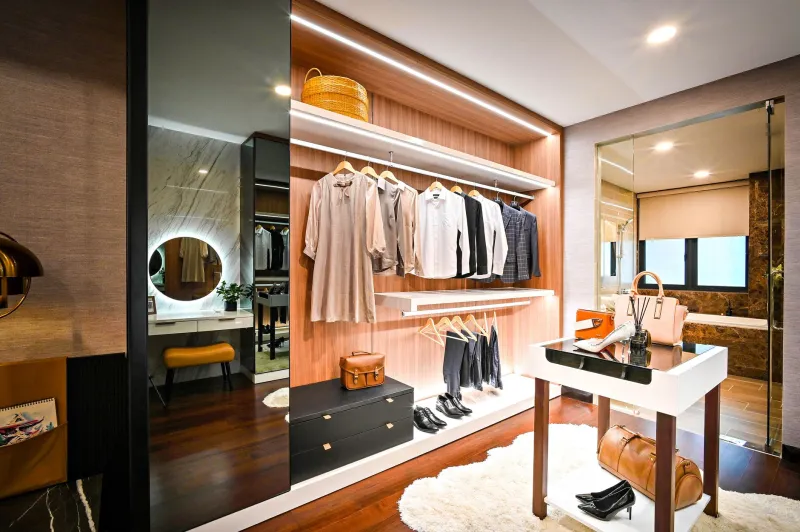
There is a particular kind of wardrobe frustration that has nothing to do with scarcity. You stand before a closet that is, by any reasonable measure, full—and yet the sensation that persists is one of having nothing to wear. The irony is not lost on most women who have cultivated a thoughtful collection over the years. The truth, more often than not, is that the wardrobe is not lacking. It is simply misread.
Certain pieces have been quietly demoted. Not discarded, not forgotten entirely, but mentally filed away under labels that feel permanent: too formal, too bold, not quite me anymore. These garments hang at the back of the rail, bypassed morning after morning, their potential entirely intact—and entirely ignored. Rediscovering them is not a matter of lowering standards. It is a matter of reconsidering the stories you have attached to them.
Why Perfectly Good Pieces Stop Being Worn
The psychology behind an unworn garment is more nuanced than simple dislike. In most cases, a piece was purchased with genuine intention—there was something compelling about it in the store, something that spoke to an aspiration or a mood. What changes is rarely the garment itself. What changes is context.
Consider the silk blouse purchased for a specific dinner that has since passed. Once that occasion is mentally checked off, the blouse becomes orphaned—beautiful, but apparently purposeless. Or the structured blazer in a deep emerald that felt perfectly right at the point of purchase, only to be sidelined the moment it arrived home and seemed to demand an outfit that never quite came together. These are not failures of taste. They are failures of imagination, and they are remarkably easy to correct.
There is also the category of pieces that were bought for a version of your life that does not yet exist—or no longer does. The aspirational dress for the gallery opening, the tailored trousers intended for a more formal office environment. These items carry a quiet pressure, a sense that wearing them requires a life that matches. Releasing that pressure is the first and most important step in reclaiming them.
The Honest Closet Inventory
Before any styling solution can be applied, a clear-eyed inventory is necessary. This is not the standard wardrobe audit focused on discarding—it is an exercise in identification. Set aside an unhurried afternoon and remove every piece you have not worn in the past three months. Lay them out where you can see them fully, without the compression of a packed rail distorting your perception.
For each item, ask a single, direct question: Why haven't I worn this? Write the answer down if it helps. The responses will almost certainly fall into one of a few recurring categories—occasion anxiety, styling uncertainty, or a perceived mismatch with current identity. Each of these has a practical remedy, and none of them require spending anything.
Dissolving the 'Too Formal' Barrier
Occasion anxiety is perhaps the most common reason exceptional pieces go unworn. A beaded camisole, a structured midi skirt, a pair of wide-leg trousers in a luxurious fabric—these items are frequently categorized as requiring a special event that simply never arrives with enough frequency.
The remedy is deliberate contrast. Formality, when balanced against something more relaxed, reads not as overdressed but as intentional. That beaded camisole worn beneath a relaxed linen blazer and paired with straight-leg denim becomes a considered daytime ensemble rather than an evening-only statement. The structured midi skirt, combined with a simple ribbed turtleneck and loafers, loses its occasion-specific quality entirely and gains something more useful: everyday elegance.
The principle is consistent: anchor the elevated piece with something grounded. The contrast does not diminish the finer item—it makes it approachable without stripping it of its character.
Styling Through the 'Too Bold' Hesitation
A bold piece—whether in color, print, or silhouette—often suffers from a different kind of avoidance. It was admired in isolation, but in the context of a real morning and a real day, it feels like too much. The solution is not to retreat to neutrals permanently, but to build the outfit around the bold element rather than adding to it.
If you own a richly patterned wrap skirt that has spent the better part of a season untouched, resist the instinct to pair it with another visual statement. Instead, treat it as the sole focal point. A clean white or cream top, simple leather slides, and minimal jewelry allow the skirt to fulfill its purpose without competition. The same logic applies to a statement-sleeved blouse or a coat in an unexpected hue: let it lead, and build everything else in service of it.
Boldness, properly framed, is not excess. It is confidence made visible.
Reclaiming Pieces That Feel Like 'Someone Else'
Perhaps the most interesting category of overlooked garments is the one that feels like a former self—or a self that was never quite inhabited. A sharply tailored jacket purchased during a more corporate chapter of life. A romantic floral dress that seemed to belong to a softer mood than the one you currently occupy.
These pieces deserve reconsideration rather than dismissal. Style is not static, and the most compelling wardrobes are those that contain a range of expression. The tailored jacket does not require a boardroom—it works equally well over a slip dress or with wide-leg trousers on a weekend. The floral dress, belted and layered with a structured cardigan, shifts its register entirely without losing what made it appealing in the first place.
The question is not whether the piece still fits the person you were. The question is whether it can be styled to suit the person you are.
The Multiplication Effect
Here is where the practical reward becomes tangible. Once five to eight previously sidelined pieces are reintegrated into active rotation, the number of viable outfits in a wardrobe does not increase incrementally—it multiplies. Each newly active piece creates new combinations with the items already in regular use, generating outfit possibilities that did not exist before not because new clothes were added, but because existing options were finally seen clearly.
This is the quiet power of a well-considered wardrobe edit. It asks nothing of your budget and everything of your attention. The pieces were always there. The elegance was always present. What was missing was simply the willingness to look again—and to look differently.
At Little Étoile, we believe that true style is less about acquisition and more about discernment. The wardrobe you already own, reconsidered with fresh eyes and honest intention, may be precisely the collection you have been searching for all along.